Anjarai Petti Kolam
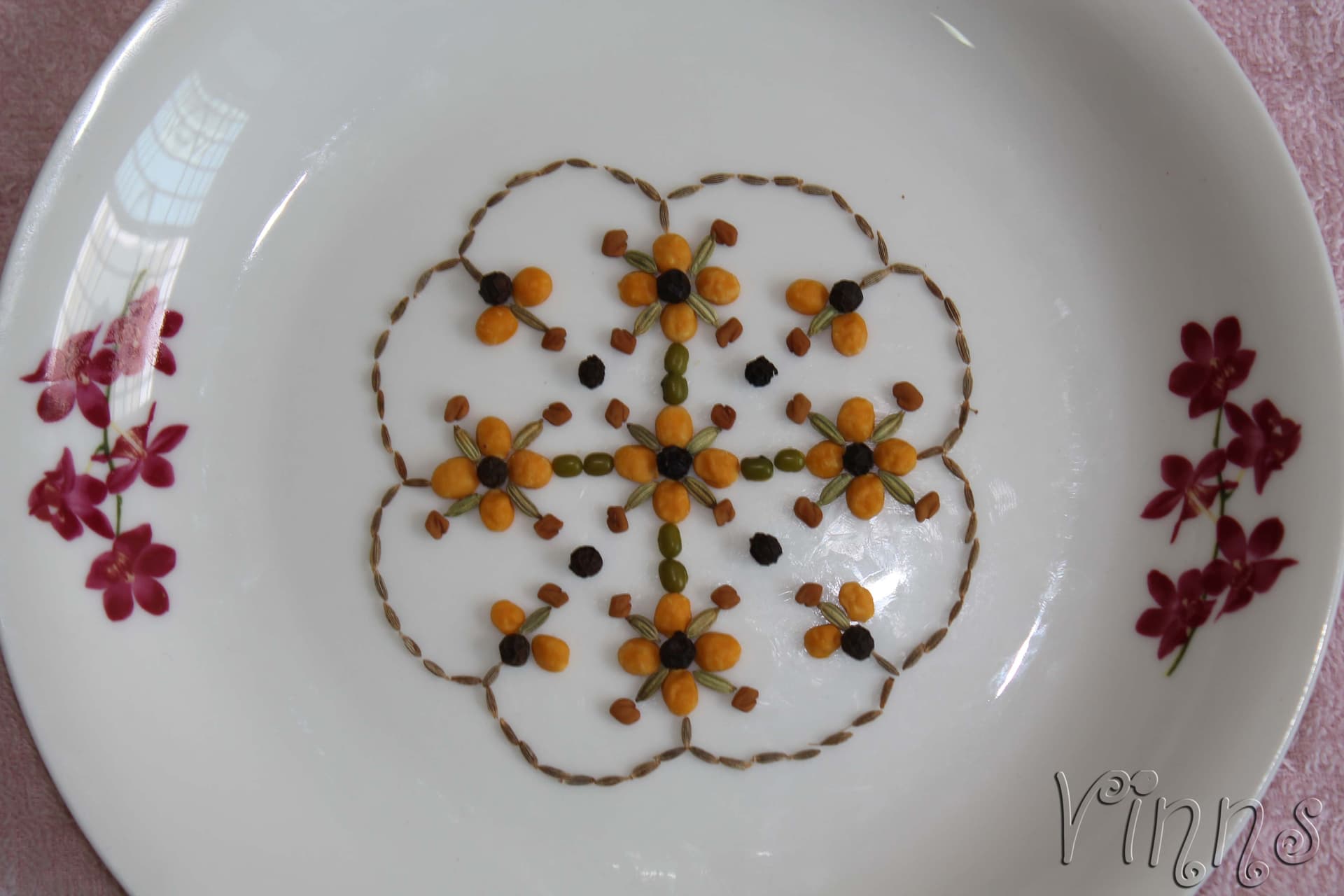
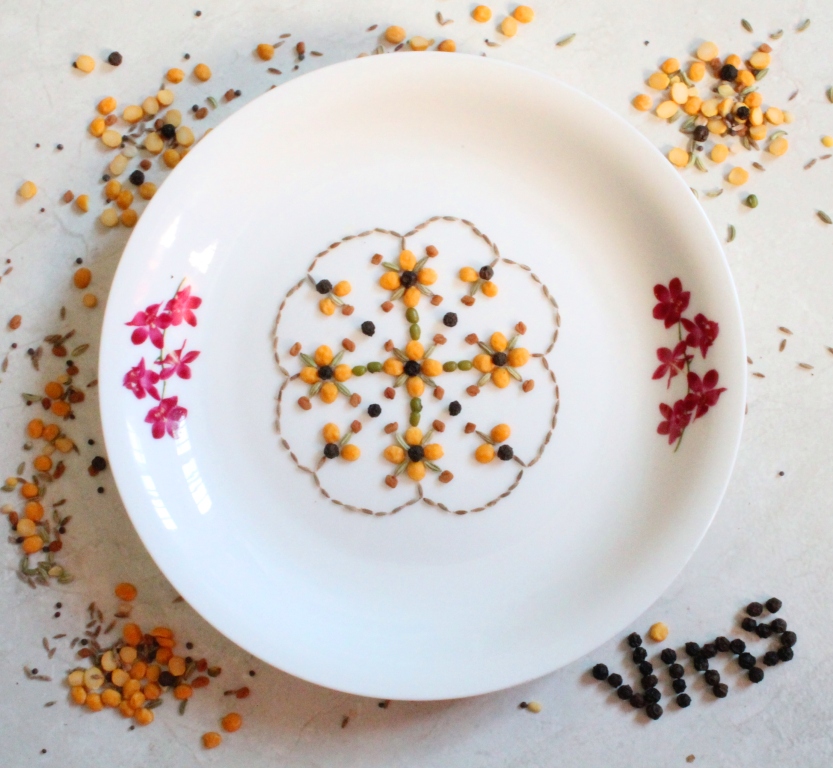
I have used the spices which are usually stored in a South Indian "Aindhu Arai Petti" means box with five divisions, which is handy during cooking. I have used Bengal gram, Cumin seeds, Fenugreek, Pep.
I have used the spices which are usually stored in a South Indian "Aindhu Arai Petti" means box with five divisions, which is handy during cooking. I have used Bengal gram, Cumin seeds, Fenugreek, Peppercorns, Fennel and green gram. No home work was done beforehand. I took all the spices and grams to fit into the kolam. This combination looked fine and went ahead with the design. To me, causally done are always the best.
Roughly this kolam can be catergorised to 13-1 dot count.
Gather Organic Edible Colors
Prepare natural kitchen mediums: pure raw rice flour (white), herbal turmeric powder (golden yellow), natural kumkum (crimson), and dried seeds or pulses.
Draw Botanical Motifs & Vegetable Imprints
Use cross-sections of okra (ladyfinger) or lotus stem dipped in natural pigments to stamp flower rosettes, or sketch botanical tendrils freehand.
Connect Creepers & Leaf Sprays
Guide flowing streams of white rice flour to weave connecting vines, mango paisley leaves, and grain stalks into a harmonious organic tapestry.
Ring the Border with Grain Offerings
Line the outer boundary with whole rice grains, yellow lentils, and fresh flower buds as an auspicious welcoming offering for birds and garden life.
Related Traditional Patterns
Similar geometries, symmetry types, and festive floor art styles