Freehand Kolam with Kavi
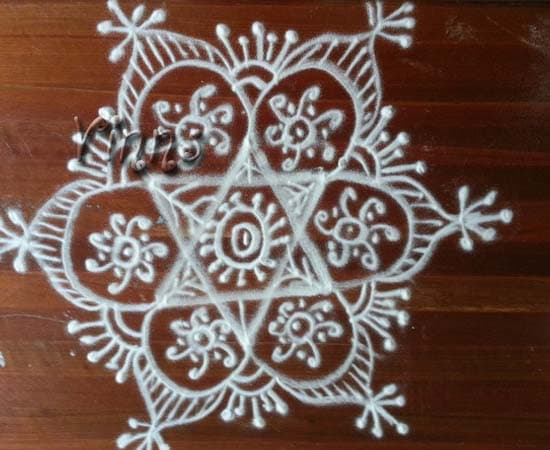
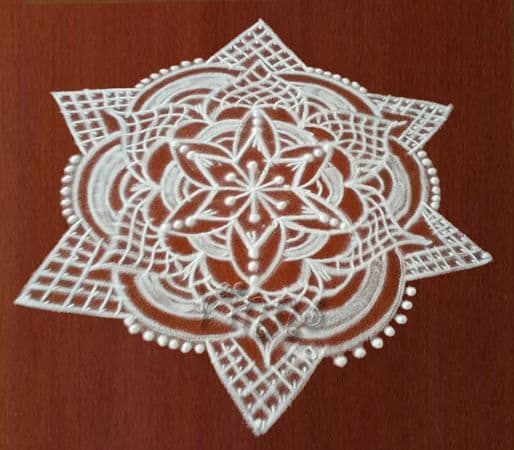
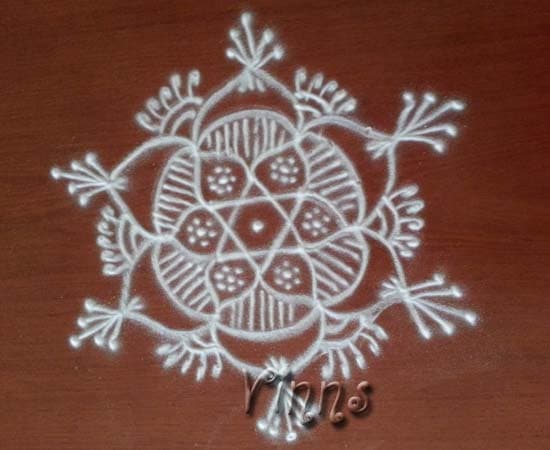
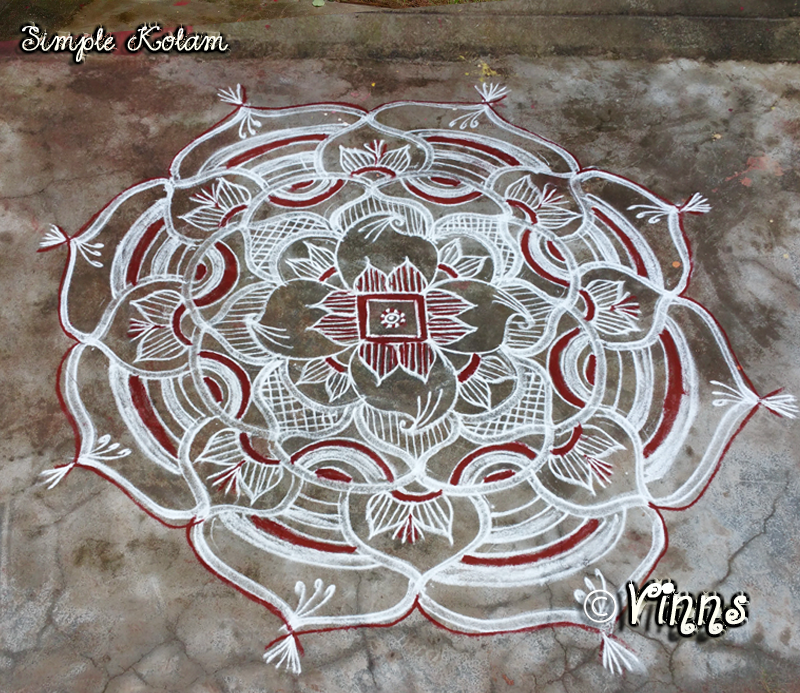
A freehand kolam with new stock of kavi which I had ordered online. This deep shade of kavi looked like maroon colour powder but looked bright and did its part in enhancement. I love the bright orange.
A freehand kolam with new stock of kavi which I had ordered online. This deep shade of kavi looked like maroon colour powder but looked bright and did its part in enhancement.
I love the bright orange tint of the origninal kavi, the red soil - SemMan. I remember during my childhood days, it was the semmen which was used on fridays and tuesdays to decorate the kolam. The sieved soil gets into a small container and mixed with water, then applied on the floor with a piece of cloth. Colour powders were used only during Margazhi season or for any family functions.
Now its the red oxide taking the role of kavi.
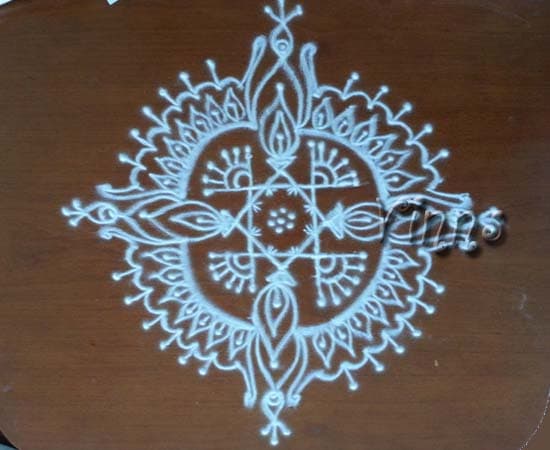
A simple kolam with square at the centre and extended with Paisleys and minarets.
Sketch the Central Focal Contour
Clean and dampen the floor. With light chalk or a thin stream of white rice flour, sketch the primary central motif (such as a blooming lotus, royal peacock, or sacred oil lamp).
Sweep Concentric Petals Outward
Radiate curving petals, mango paisleys, or flowing floral flourishes outwards from the center, maintaining uniform distance across all quadrants.
Blend Vibrant Natural Powders
Fill the petals and interior sections with rich festive colored powders or dyed rice grains, blending smoothly from deep shades at the base to bright tones at the tips.
Define Crisp Edges & Corner Lamps
Outline all boundaries with a bold, steady line of pure white rice flour to give the colors radiant contrast. Place brass or earthen oil lamps at the perimeter points.
Related Traditional Patterns
Similar geometries, symmetry types, and festive floor art styles