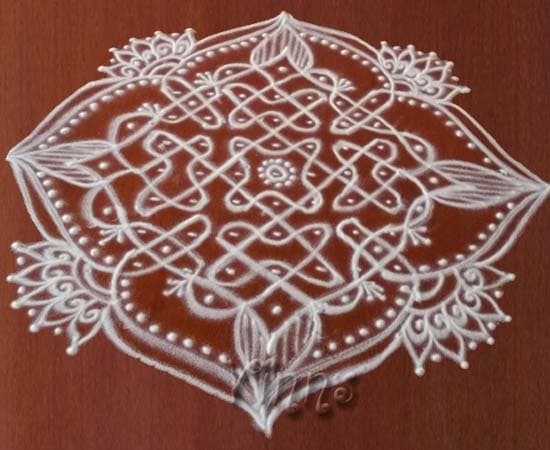
Pulli Kolam
The foundational mathematical matrix of South India, connecting or circumscribing dots in straight or interlaced arrays.
The Sacred Grid: Pulli (Dot) Matrix Art
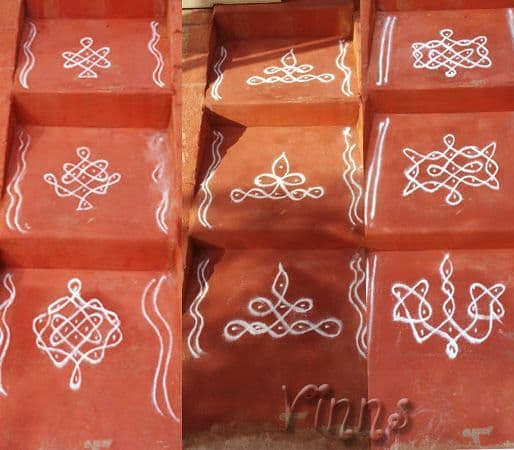
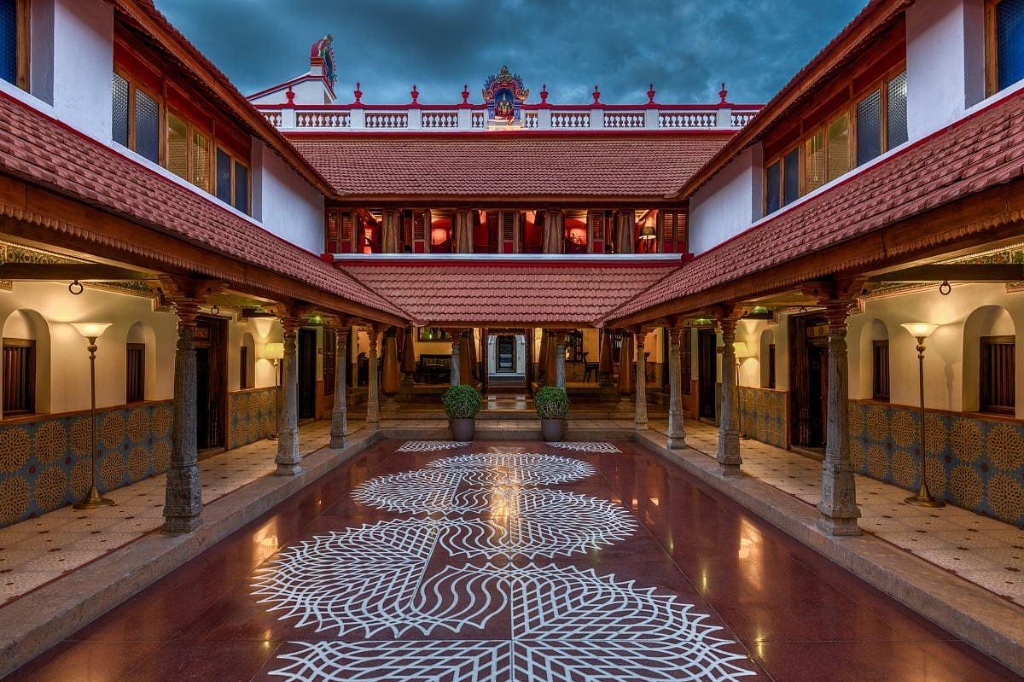
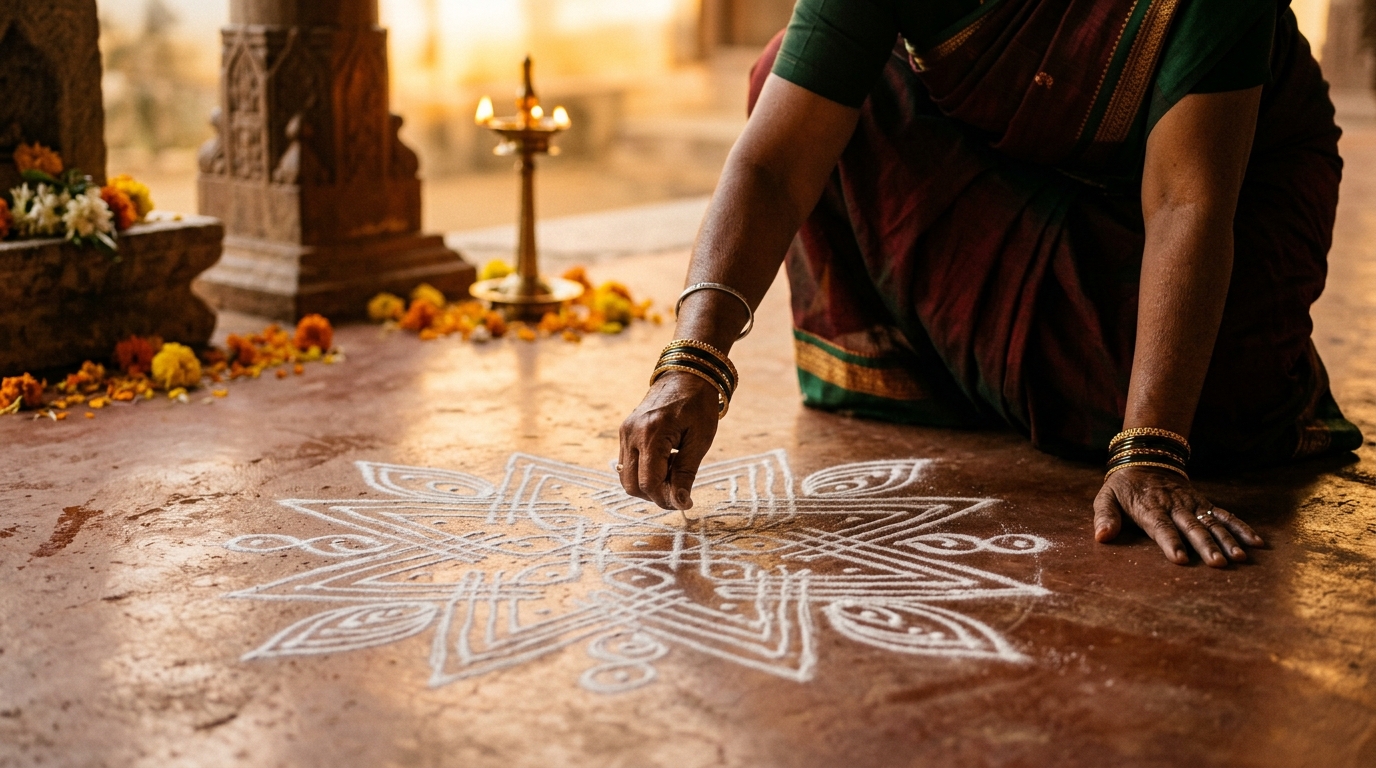
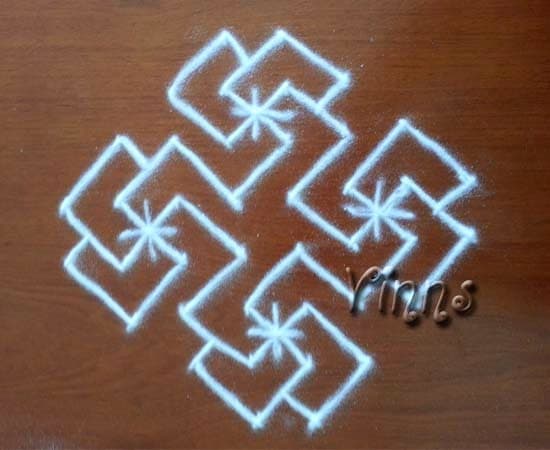
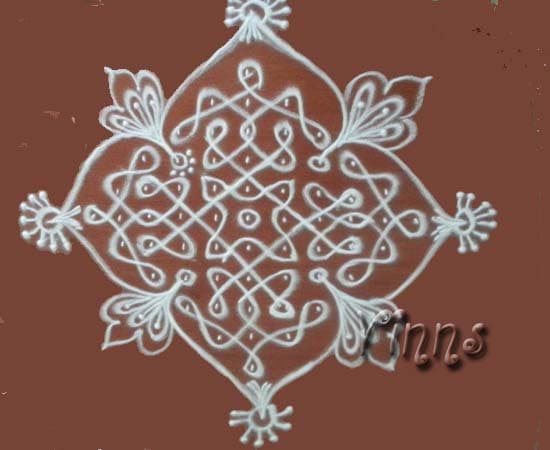
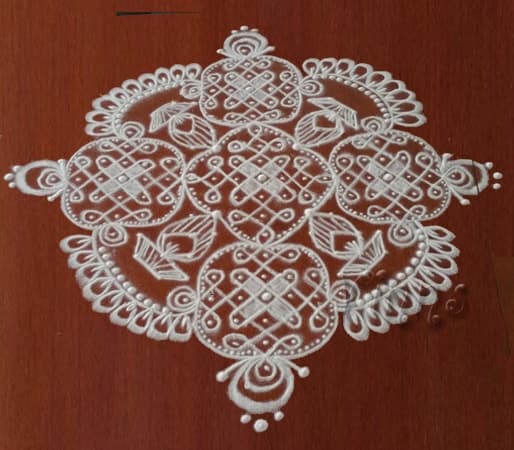
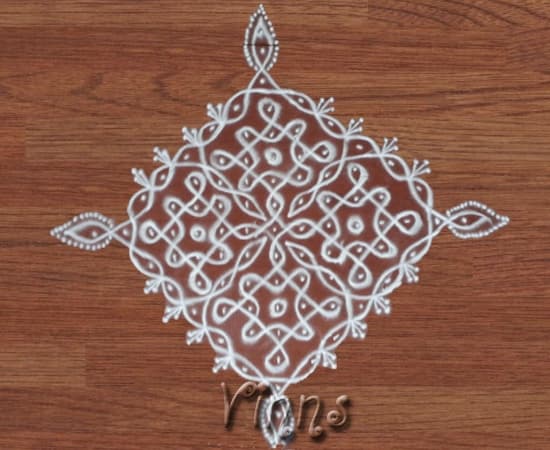
Pulli Kolam represents the bedrock foundation upon which generations of South Indian women learn the art of threshold geometry. Pulli translates directly to “dot” in Tamil. Before a single stroke is drawn, the courtyard threshold is sanctified and marked with an orderly, disciplined constellation of points using coarse white rice flour.
Two Primary Grid Systems
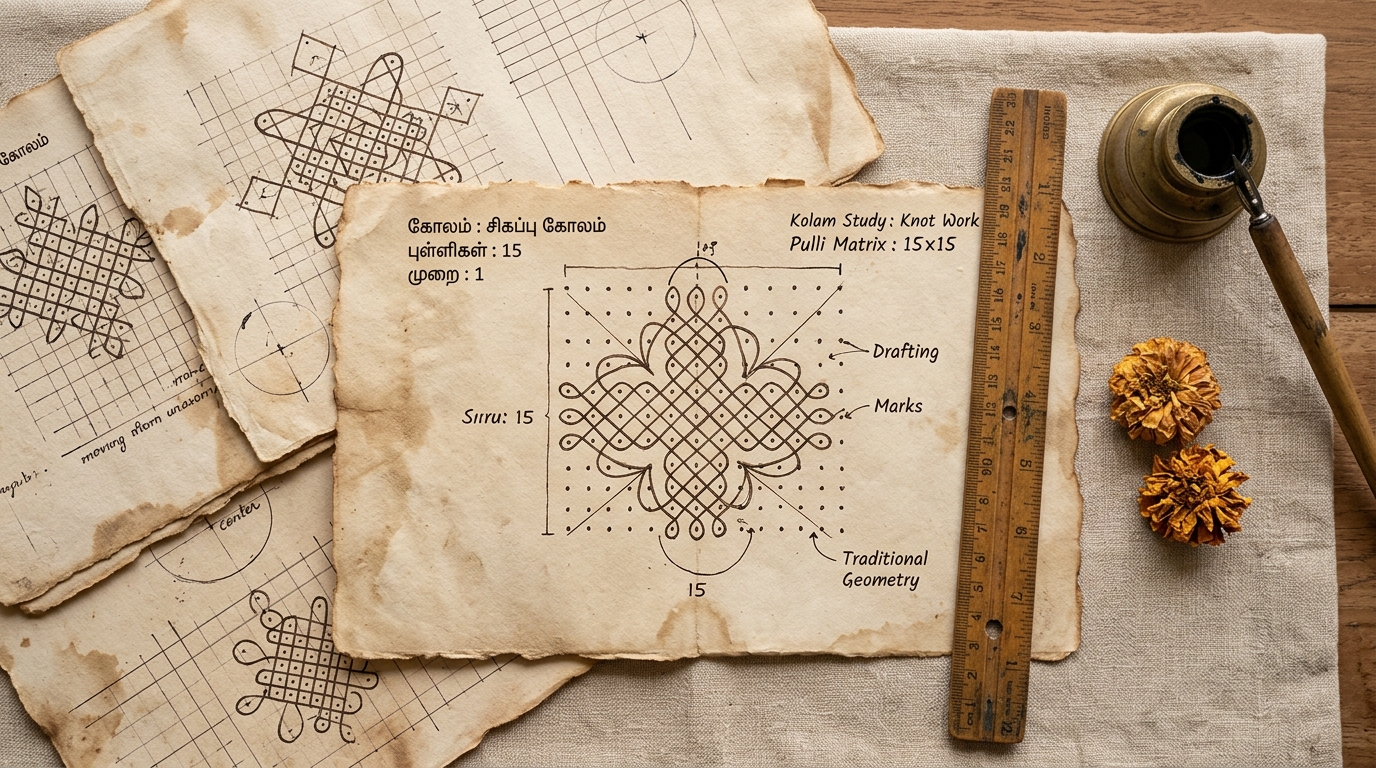
Every traditional Pulli Kolam relies on one of two fundamental coordinate systems:
- Ner Pulli (Straight Grid): Dots aligned in strictly parallel rows and columns (e.g., 5×5, 7×7, 15×15), forming Cartesian matrices ideal for star symmetries and mandalas.
- Idu Pulli / Sandhu Pulli (Interlaced Grid): Each subsequent row has dots nestled diagonally between the dots of the preceding row (e.g., 9 dots tapering down to 1 dot on either side), forming hexagonal and rhombic symmetries.
Daily Ritual & Ecological Charity
Drawn at daybreak, the edible rice powder of a Pulli Kolam provides nourishment for ants, birds, and insects. It exemplifies Bhootha Yajna: honoring fellow living creatures before the human household partakes in daily sustenance.